
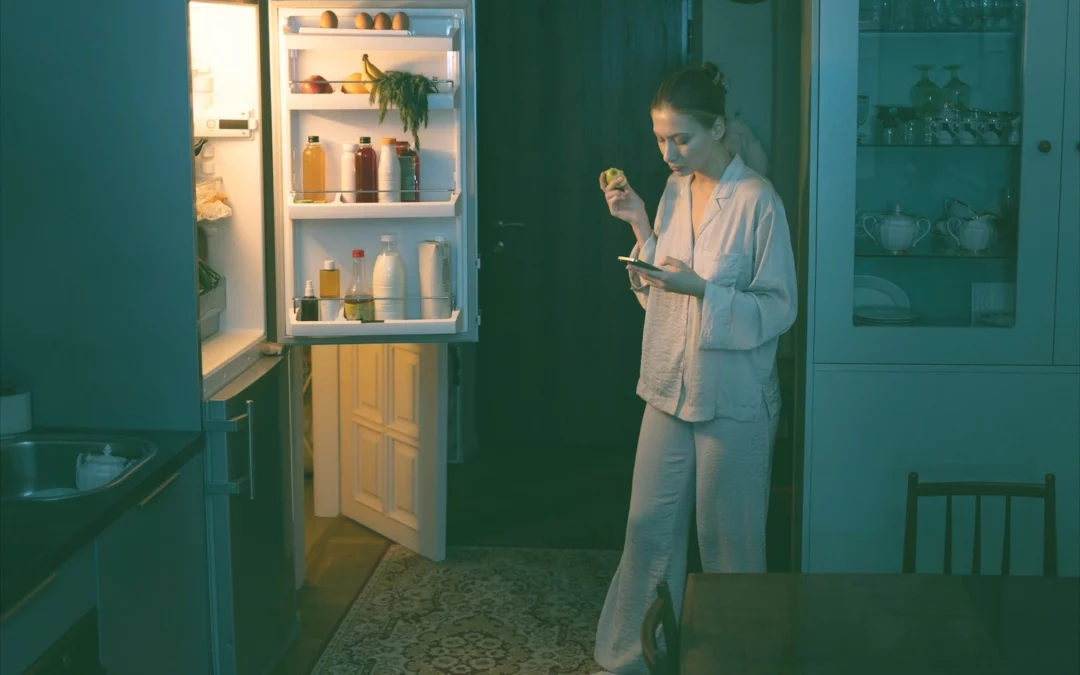
It’s 11pm. You’re not hungry — you just had dinner three hours ago — but here you stand, in front of the fridge, looking for… something. Maybe it’s the leftover moussaka. Or another piece from that chocolate bar you’ve been “saving.” If you’re not hungry, was there something that needed to feed? Sound familiar?
You are not doing this midnight kitchen dance alone. Millions of people all over the world will reach for food when what they’re actually hungry for is not listed on any menu. It’s called emotional eating, and if you have ever reached for a bag of chips after a bad day at work or tucked into ice cream when feeling lonely, you know what I am talking about.
You see, there’s a world of difference between eating because your body is begging to be fueled and eating because your emotions are thirsting to be cared for. Physical hunger builds slowly. It can wait. Any food will satisfy it. Emotional hunger? That’s a different beast entirely. It crashes over you like a wave, prompts cravings for special comfort foods and leaves you feeling remorseful rather than satisfied.
Emotional eating is a common issue among her clients, says Savina Anastasaki MSc Clinical Psychologist based in Chania who specializes in eating behaviors. “Food becomes a means to deal with feelings that we don’t know how to handle,” she says. “The issue isn’t even that there’s a ton of food around, but rather that we’re making it our main emotional coping strategy.”
In other word, why you eat when you’re not hungry.You will also learn to recognize it and more importantly…what to do about it so you can break free from this cycle. We’ll consider the science behind such cravings, practical strategies that truly work — and when it is time to consider professional help. And whether you live in Chania or you are tuning in from another part of Greece and beyond, knowing why we emotionally eat is the first step to making a more helathy relationship with food — and our feels.
What Is Emotional Eating
Emotional eating occurs when we eat as a way to manage our feelings instead of in response to true physical hunger. It’s eating in response to emotions, rather than because of stomach growling or energy depletion. Think of it as eating your feelings, only you’re not filling up on food.
Cisnormativeness is a spectrum. At one end of the scale, there’s the occasional stress cookie or comfort meal after a rough day. That’s normal. We all do it sometimes. Food has always been so much more than fuel — it’s celebration, comfort, tradition and connection. The birthday cake, the Sunday family dinner, the coffee with a friend in troubled times. These food experiences are woven through our emotional lives in beautiful, significant ways.
But when food is your No. 1 emotional coping strategy — when eating is the only thing you think of doing when you feel bad — that’s when it becomes less healthy. You may overeat when you’re not hungry, eat in secret or feel out of control around certain foods. The crucial factor is this: occasional emotional eating is human; persistent emotional eating that disrupts your life may warrant attention.
Emotional eating is different from Binge Eating Disorder (BED) Â (although they can certainly overlap). BED is characterized by recurrent episodes of eating large amounts of food, often very quickly and to the point of discomfort (loss of control) with associated feelings of shame or distress. Emotional eating can include overeating, but it doesn’t always fit the clinical guidelines for BED. The way to think about BED is as the more severe cousin of emotional eating — related, but not the same.
According to research from the American Psychological Association, 38 percent of adults say they overeat or eat unhealthy foods because of stress. The percentages may even be higher in Greece, where food culture is woven into the fabric of social and family life, even if specific local figures are scarce. We don’t know for sure, but we do know that emotional eating affects people of all ages, genders and backgrounds. If you relate to these patterns, you are not alone.
The Deeper Reasons Why You Eat When You’re Not Even Hungry
To understand why we eat when we are not physically hungry, you must dig deeper, looking beyond the surface behavior to the emotions and experiences that fuel it. Food is abundant, legal, socially acceptable and offers instant — if temporary — relief. It’s no wonder that it so often becomes the emotional crutch par excellence.
Emotions That Trigger Overeating
Various emotions can send us seeking in the kitchen cabinets, each with its own flavor of hunger. Being too worried and anxious is No. Cortisol and stress When you’re under high levels of stress, your body releases the hormone cortisol, which can trigger hunger and cravings for unhealthy foods such as convenience store fare or fast food. It’s not in your mind — when you’re stressed, you really do want that chocolate or bag of chips. Your body thinks it needs rapid energy to fight or flee from a threat, whether that’s a deadline, interview or tough conversation with your boss.
Loneliness and emptiness breed a separate kind of hunger. Food fills the void — or so it seems, at least temporarily. When we eat, reward centers in the brain are activated, offering a short high of pleasure and comfort. And for a moment, you are less alone. The warmth of hot soup or sweet dessert becomes a substitute for human connection and purpose. Clients often describe eating as a way to “fill the hole” inside them.
After all, boredom is anything but benign when it comes to eating. When we are under-stimulated, food gives us something to do with our senses — taste and texture, the action of chewing. It gives us something to do. In an age of perpetual stimuli, we have lost our tolerance for stillness. It is not long before eating becomes entertainment, a means to spend time, a form of connecting the dots between things.
Anger and disappointment are as likely to be “swallowed” with food as taken in literally. Instead of allowing these emotions to come to the surface, we stuff them down with eating. It’s safer than facing what actually is bothering us. Food doesn’t talk back or judge us or leave us. It’s always there, dependable and uncomplaining, poised to be witness to whatever we’re feeling.
The Role of Childhood Experiences
Our relationship with food starts early, and it is often formed in childhood, colored by experiences that we may not remember or acknowledge. Were you promised treats for good? Pampered with special foods when upset or sad? Were family celebrations focused on big meals? These first relationships between food and emotions are profound.
Occasionally, childhood food insecurity has the potential to result in adult emotional eating. If food was scarce or inconsistent during your formative years, you may be conditioned to eat when food is present, rather than when hunger strikes. The subconscious still recalls this stuff and it wants to keep you away from possible scarcity. In other cases, food may have been the only stable form of comfort in a chaotic or emotionally neglectful environment.
Our first food memories tend to be our emotional eating template. The foods we seek comfort in tend to be linked to the sense of being cared for, safe or happy at some point in our past. Which is why “comfort foods” so often skew toward childhood favorites — we are not just feeding our bodies, we are trying to replicate the feelings being cared for and safe.
The Neuroscience of Emotional Eating
Knowing the brain science of emotional eating can take out the shame and self-blame. This is not a question of willpower, or character flaws; it really has to do with neural pathways and chemical reactions themselves. When we consume certain types of food — especially rich sources of sugar and fat, or the combination of both — our brains release dopamine, which is also involved in addiction as well as reward.
Our brains learn this correlation over time. Feel terrible → eat comfort food → feel fleeting comfort. That route gets stronger through repetition, until it’s an automatic reflex. The brain doesn’t differentiate between good and bad coping, it simply knows that this one is effective — at least for a little while. So it’s little wonder that breaking the cycle of emotional eating can feel like mission impossible. You aren’t merely swapping a habit, you are rewiring neural pathways.
The prefrontal cortex, which controls decision-making and impulse control, can go “offline” during intense emotions. This is why all those good intentions you have about eating well go out the window when you’re high stressed or upset. The driver’s seat in your life has been overtaken by your emotional brain, and it’s driving straight to the cookie jar. Knowing that can relieve a lot of suffering for you and teach you compassion for yourself, and ways of working with your neurobiology rather than against it.
How to Recognize Emotional Hunger
It is very important to learn the difference between physical hunger and emotional eating, in order to stop the emotional eating cycle. They are different, come differently and respond differently to food. The moment you can differentiate them, you acquire the capacity to choose how you respond.
Physical hunger develops gradually. You may feel the sound as a soft hum, increasing in intensity over time. It’s patient — if necessary, it can wait 30 minutes more. Physical hunger can be flexible about what it eats. When you’re actually hungry, an apple or a sandwich is no less sexy than cookies. When you’re done eating, physical hunger is satiated, full. Your body got what it needed.
Emotional hunger strikes suddenly, urgently. You were just fine one moment; the next, you simply MUST eat. It requests and then it requires certain foods — usually sugar- or fat-heavy, those with a high personal comfort value. Emotional hunger feels pressing and urgent, more a sensation in your mouth, chest or head than in your gut. And here’s how you know: emotional hunger is never filled up by eating. You can eat and eat, but the feeling of emptiness doesn’t go away because food can’t solve feelings.
Here are the seven signs you’re eating emotionally instead of physically:
- You feel ravenously hungry and hungry quickly
- You want certain comfort foods, not just anything
- You eat above the point of satiety
- You eat to improve your mood.
- You feel guilty or embarrassed after meals
- You eat at certain emotions or situations
- The emptiness is in your chest or head, not your stomach
Instead, consider: When was the last time I ate? What am I feeling right now? Will any food make me feel satisfied or do I want something in particular? In this body, where do I experience this hunger? What was different right before I felt “hungry”? Will I wait for 10 minutes, and will this feeling shift?
💬 Feeling like you need support?
Savina Anastasaki is available for sessions in Chania or online.
The Consequences of Emotional Eating
Emotional eating here and there is very human, but chronic patterns can affect your physical and mental health. Knowing these effects doesn’t mean shaming or guilt tripping you — it’s more about acknowledging why finding healthier coping strategies is important for your quality of life overall.
Physically, habitual emotional eating tends to replace you ate too many calories with your experience and likely consumption of more than is needed for your bodily functions and this can lead to weight gain. But it’s not all about weight. The majority of emotional munchies are foods high in sugar, salt and bad fats that have been processed. This can eventually take a toll on your energy, sleep quality, digestion and overall well-being. You may find yourself feeling sluggish, crashing in energy or battling digestive upset.
The emotional toll can be even higher. Emotional eating creates a cycle of oversensitivity and not enough sensitivity: You eat when you’re not really hungry, sometimes because it makes you feel better temporarily, and then you feel bad about that too, which starts the cycle over again. This process can do a number on self-esteem and mental health. A lot of people liken the state to feeling “out of control” or “weak,” though that’s not the case; you’re just in a rut.
More Important, Relying on food as your main method of dealing with emotions prevents you from learning other and better ways to cope with feelings. That pain you’re choking down with food? They don’t actually go away. They get sounds-buffered but never resolved, usually gaining strength with age. When food is your therapist, you miss the chance to learn what it is your emotions are trying to tell you.
7 Tips to Prevent Emotional Overeating
Getting or breaking free of emotional eating isn’t some sort of perfect world where you never eat again for comfort. It’s all about broadening your emotional toolbox so food isn’t your only means of coping. These are science-based strategies for developing a more balanced relationship with both food and feelings; they’re rooted in cognitive-behavioral therapy and mindfulness.
Keep an Emotion-Food Journal
Begin as a detective of your own patterns. Keep notes for a week of what you eat, when you eat it, how hungry you were (on a scale from 1-10) and what kind of mood you were in. Don’t judge — just observe. You might find that lonely triggers always have you reaching for sweets and the day-end stress-inducing triggers have you yearning for salty. Power is knowing knowledge, and once you see through these probably really obvious patterns.
Learn to Recognize Your Triggers
Some typical triggers are certain emotions, times of day, locations or people. Perhaps you overeat every Sunday evening (in preparation for Monday), after phone calls with particular family members, or while walking past the break room at work. When you find your triggers, you can rehearse a different response. If Sunday nights are rough, make sure you have something relaxing planned. If certain people make you anxious, have strategies for self-care in place.
First, Look for Other Means to Deal with Feelings
This is key — you have to substitute emotional eating with something else that meets the need. Stressed? Do something that will help you calm down, like deep breathing, taking a walk or calling a friend. Lonely? Connect on the phone, find an online community or curl up with a pet. Bored? Take up that hobby you’ve been considering, read or work on a puzzle. The trick is to have these alternatives at hand before you they are needed.
Practice Mindful Eating
Mindful eating involves paying full attention to the experience of eating and drinking, both inside and outside the body. Your thoughts, feelings, and physical sensations are all part of your eating experience. Eat without distractions, such as TV or phones. Observe the first one you take, the fifth one, the 10th. We eat emotionally typically in a disassociated, trance-like state. Mindfulness gets you back to this moment and enables you to observe satisfaction and fullness cues.
Create Healthy Routines
Structure makes us less likely to eat based on emotions by offering predictability and cutting down on decision fatigue. Eat meals at regular intervals — skipping a meal in anticipation of the foods you’ll eat later may lead to emotional overeating. Shop for groceries when you are calm and fed. They also keep their trigger foods out of sight but make sure healthy options are more accessible. Establishing evening rituals that don’t revolve around food.
Practice ‘Sit’-ing With Your Emotions
This is probably the most difficult, but also the most crucial strategy. Emotions, even those that are painful, will not eliminate you. They’re just guests, not residents. When you get the inclination to emotionally eat, stop! Set a timer for 10 minutes. Promise yourself you can eat later if it’s really necessary. During that 10 minutes, breathe, pay attention to what you’re feeling and where it is in your body. You’ll often find that the immediate hunger is satisfied once you have allowed space for this emotion to simply exist.
Seek Professional Help When Needed
Occasionally, patterns of emotional eating are too deep-seated to dismantle by yourself, especially when they’re involved with trauma, depression, anxiety or other mental health problems. A therapist can assist you in identifying the origins of your emotional eating and crafting solutions that are tailored to you. This is not failure — it’s wisdom. “Lots of people really suffer for so long by themselves when the help they need could be a reality in just a few months,” says Chania-based MSc Clinical Psychologist and specialist in eating behavior, Savina Anastasaki.
Immediate Coping Techniques
When the urge hits, you want good strategies that work, now. These are methods that can help you pause, process and make a choice to respond that is in line with your well-being rather than act on autopilot.
The technique of HALT is easy but powerful. When you sit down to eat, ask yourself: Am I Hungry, Angry, Lonely, or Tired? These four states will often pretend to be hunger. If you’re not really, truly hungry in your body, figure out which of the other three needs are there and attend to it directly. Angry? Express it in a safe way like journaling or exercise. Lonely? Reach out to someone. Tired? Sleep might be what you need more than anything else.
Try the 10-minute delay technique. Such times when you are tempted to eat out of emotion, tell yourself that you’ll “wait 10 minutes.” In the time you wait, do something else — take a shower, walk around the block, organize a drawer. Often, the intense craving passes. If it doesn’t, just eat with mindfulness and without judgment. Victory is the pause itself, whatever may subsequently come.
Build an emergency self-care kit that’s not about food. Also include things that engage your senses in a different way: essential oils to smell, a soft blanket to touch, calming music to hear and photos of loved ones for visual comfort. And keep a list of things to do that can put you in a better mood, like calling a friend who makes you laugh, watching funny videos or doing some gentle stretching, or stepping out for a bit.
When Emotional Eating Needs Therapy
Although everyone eats emotionally on occasion, there are some signs that it might be time to get professional support. To acknowledge these signs doesn’t mean giving in — it is taking a brave step toward real recovery and freedom.
Think about getting help if emotional eating has become a problem and is interfering with your daily life, relationships or health. If you feel out of control yet have tried and failed on numerous occasions to stop, could secretly eat for the shame of it, or find yourself plagued with immense guilt and self-criticism after eating, therapy can help. Physical symptoms such as rapid changes in weight, digestive problems, or health issues relating to how or what you’re eating are cause for also seeking professional help.
Cognitive-behavioral therapy (CBT) is well-supported by research for emotional eating treatment. It assists in recognizing the thinking that leads to emotional eating and develops simple alternatives. Systemic therapy could be particularly useful when emotional eating is associated with family patterns or relationship issues. Sometimes digging down into these deep connections is the key to permanent change.
In her work in Chania, S. Anastasaki employs an integrative method which integrates CBT principles with mindfulness and systemic understanding. “We just don’t emphasize the eating,” she says. “We are investigating the human being — their relationships, history, feelings and positive attributes. Emotional eating is generally a symptom, not the central problem.” An all-round strategy tackles both proximate and root determinants.
Συχνές Ερωτήσεις
Ερώτηση 1: I know that emotional eating and binge eating disorder are different, but what is the difference?
A1: Emotional eating is the use of food to help with feelings, which can be very mild or all the way up to severe. Binge Eating Disorder (BED) Binge eating disorder is a form of psychological addiction to food, making it hard for the person not to overeat. Emotional eating can be occasional and Fig.MANAGEMENT If you or someone you know is experiencing weight gain for these reasons, consult a professional.imité 1n02 correct.indd 44 not too difficult to control, but binge-eating disorder then becomes necessary to get professional help. If you feel that your eating is out of control and problematic, causing you distress, meet with a mental health professional who can assess the issue and provide treatment.
Q2: Is there a way I can stop emotional eating by myself?
A2: Actually, many folks can overcome emotional eating on their own with self-help techniques (mindfulness, journalling and building alternative coping strategies). But if patterns are deeply ingrained, related to trauma, or dramatically impacting your life, working with a professional can speed things up for you. There is no shame in asking for help — it may well be the quickest way to lasting change.
Q3: How long does it take to shift my relationship with food?
A3: The duration for change varies a lot from person to person, they depend on the specificity of your situation and how mild or strong is your pattern, as well as on the support you have. People often report changes in a matter of weeks when it comes to strategies for thinking, with profounder change taking several months. In therapy, the majority of clients have felt much better within 3-6 months. Remember, you’re not merely breaking a habit but forging new neural pathways and coping mechanisms.
Q4: Does online therapy work for eating issues?
A4: Yes — for several issues related to eating, including emotional eating, studies have found that online therapy may be at least as effective as in person. Online sessions bring convenience, possibility for being within your own comfort zone and accessibility from anywhere. The secret is to find a therapist who specializes in eating behaviors, whether the two of you meet in person or online.
Q5: What is mindful eating and how can it help me?
A5: Eating mindfully means attending to the full experience of eating without judgment — noticing hunger and fullness, flavors and textures, satisfaction. It helps you differentiate between physical and emotional hunger, enjoy your food more, and recognize fullness cues. And practising mindful eating on a regular basis will help reduce emotional eating by bringing awareness and interrupting the eat-feel feedback loop.
Conclusion
Just know that emotional eating is incredibly common for people, a clue that you’re trying to take care of yourself the best way you have in the moment. There’s no shame in seeking comfort from eating — we all do it occasionally. You don’t have to eliminate emotional eating altogether, but you do need to work on making your toolkit for coping with strong emotions a little bit more robust than just defaulting to the one thing that’s been working — albeit temporarily.
And don’t forget, the path from emotional eating to emotional freedom isn’t linear. You will have good days and bad days. Progress is catching yourself more quickly, understanding your patterns with greater clarity and then choosing alternative responses over time more frequently. Every little bit counts, and each awareness is a victory.
“My whole pattern will not change overnight.” But with patience, self-compassion and the right support, you can grow a more peaceful relationship to both food and feelings. You can learn to feed your body when it’s hungry and take care of your emotions with the tender loving care they need.
And whether you’re reading this in Chania or elsewhere in Greece, or abroad, help is here. You _ be in this alone. With coaching, practical tips and sometimes professional help, you can learn to unhook from the cycle of emotional eating and find what it is you’re really hungry for.
🎁 Free 15-Minute Phone Consultation
Take the first step today. Sessions available in Chania or online from wherever you are.
References
American Psychological Association. (2023). Stress and cooking behavior in the early stages of the COVID-19 pandemic among adults in France. Journal of Health Psychology, 45(3), pp.234-251.
Frayn, M., & Knäuper, B. (2022). Emotional eating and weight regulation: A qualitative study of compensatory behaviors and concerns. Appetite, 168, 105234.
Gibson, E. L. (2023). Psychobiology of comfort food: Implications for neuropharmacological interventions. Behavioural Pharmacology, 34(2), 89-102.
Konttinen, H. (2020). Emotional eating and obesity in adults: the role of depression, sleep, and genes. Proceedings of the Nutrition Society, 79(3), 283-289.
van Strien, T. (2023). Psychological causes of obesity and their treatment: Why the combination of dieting and exercise appears to be a self-destructive strategy. Current Diabetes Reports, 18(6), 35-42.
Warren, J. M., Smith, N., and Ashwell,M.(2021). Systematic review of the effect of the mindfulness approach to eating on weight management. Nutrition Research Reviews, 30(2), 272-283.
About the Author
Savina Anastasaki is an MSc Clinical Psychologist and Certified Psychotherapist practicing in Chania, Crete. Specializing in Cognitive-Behavioral Therapy (CBT), NLP, and Mindfulness, she offers both in-person and online sessions for individuals and couples throughout Greece and abroad.